
Health technologies are not a choice but a necessity
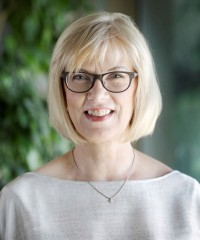
The future of health technology relies on data, expertise, and the ability to deploy solutions effectively. Saara Hassinen, a member of the Board of the Instrumentarium Science Foundation, believes that Finland can be one of the field’s forerunners when research, funding, and companies converge.
Saara Hassinen, a member of the Instrumentarium Science Foundation’s Board, is a well-known figure in the health technology sector with extensive experience in the field. For the past ten years, she has served as CEO of Healthtech Finland, and before that she worked as CEO of SalWE Ltd. The network she has built, her deep understanding of the sector, and her broad view from research to markets were key reasons behind her invitation to join the foundation’s board.
Hassinen wants to examine the development of health technology as a whole.
“Products do not emerge from thin air. They begin from a need, and behind them lies a long path of development. The strength of the foundation is that it looks one step beyond research, while also supporting the experts of the future,” she notes.
Heavily regulated – for a reason
Health care operates in a highly regulated environment. This is about patient and device safety, the work of health professionals, and the quality-of-service systems. Today, cyberthreats are also emerging more strongly.
“Health care is full of data, and that is why regulation is so prominent. Health technology solutions must be able to meet the requirements of cybersecurity,” Hassinen says.
When discussing future technologies, Hassinen places data at the core of everything.
“In Finland, where distances are long and the number of professionals is decreasing, data and its integration are essential to ensure citizens’ care and quality of life. Data is the seed for all innovation. We simply need the skill and capability to use it.”
According to her, Finland has strong expertise in measurement, monitoring, and diagnostics. In all these areas, the key factor is combining data, interpreting signals and images, diagnostic solutions, and, for example, genomic information.
“Researchers and companies have enormous opportunities across the board—whether we talk about nano, bio, or the use of artificial intelligence. From an export perspective, Finland has companies that have been global leaders for decades. Alongside them, new players have emerged developing digital services and remote solutions for growing care needs.”
Technology can be a solution or a barrier to adoption
Ageing is not only a Finnish phenomenon. Good solutions can scale globally, but technologies must be deployed in time. Hassinen emphasizes that in Finland, legislation has often slowed the adoption of new types of technologies, especially in social and health care.
“Technology is not a choice. It is a necessity, because we simply won’t have enough workers in the future. Yet staff quotas and cost pressures can paradoxically prevent these solutions from being adopted,” she says.
In home care, for example, quality is often measured by the number of visits. According to Hassinen, the indicators should change: Fewer visits can be a good thing if care is delivered more intelligently and comprehensively. “The worst-case scenario is that the system collapses first, and only then are the solutions, already developed by companies, taken into use.”
How do the Foundation’s grants support health technologies?
The foundation’s funding is not explicitly thematic, but Hassinen sees this as a potential direction for future development.
“Could we focus grants, for example, on age-related technologies or data utilization? It could be an interesting opportunity. I think I’ll raise this in the board meeting,” she says with a smile.
Hassinen has been involved in evaluating Silmu grant applications. She sees clear value in the funding model aimed at researcher-innovators and science-based entrepreneurs. Still, she believes there is room for reform for instance in balancing technology and pharmaceutical-focused projects.
“Drug development is a long and slow process, while technological development can move faster. With Silmu funding, we could choose technology-driven projects instead of pharmaceutical ones. That, too, is a strategic choice.”
The foundation’s story goes back 55 years to Instrumentarium Plc’s desire to support research.
“The vision is still to help research results become solutions, products, and services offered by companies. That’s why Silmu is such a valuable tool: it helps take research-based results forward and supports development.”
Agility and Resources Through Grants
According to Hassinen, three elements must be in place for Finland to remain strong in health technology: expertise, funding, and an innovation-friendly market.
“Foundations complement research funding, and their role has grown as state funding has decreased. The Instrumentarium Science Foundation supports doctoral research and enables postdoctoral work through its grants. Through this, we gain scientifically skilled experts - our fundamental starting point.”
“Collaboration, bold ideas, and the ability to envision the path from research to market are the keys to the future of health technology. Finland cannot do this alone, but it can be one of the countries leading the way. Communicating that message is central even from an export perspective,” Hassinen sums up.
Text: Tia Härkönen
Photo: Healthtech Finland