
How a Fellow grant helped build a research group in Finland
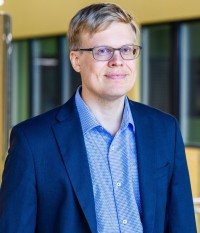
When Juho Pokki-Riikonen returned to Finland after a decade-long international research career, an Instrumentarium Science Foundation Fellow Grant provided crucial support for establishing his laboratory, recruiting researchers, and laying a strong foundation for the long-term development of his research. The impact of the grant continues to be evident in his work today as an Associate Professor at Tampere University.
After returning to Finland in 2019, Juho Pokki-Riikonen entered a completely new phase of his career. He had previously worked at ETH Zurich in Switzerland and Stanford University in the United States, but back in Finland he had no research group, laboratory facilities, or local research network.
“I had only been back in Finland for about a month when I applied for the Fellow Grant. My research network was highly international, but in Finland I found myself in a situation where almost everything had to be built from scratch,” he recalls.
In 2020, the Instrumentarium Science Foundation awarded Pokki-Riikonen a 100,000€ Fellow Grant, specifically designed to support researchers returning from abroad in establishing their own research groups in Finland.
A grant that builds credibility
Today, Pokki-Riikonen is an Associate Professor in the Faculty of Medicine and Health Technology at Tampere University. His research combines biophysics, materials science, biology, and medicine in a way that remains relatively uncommon within the Finnish research landscape.
Together with his research group, Pokki-Riikonen develops microscopy technologies and measurement methods that enable researchers to study, for example, how cancer cells move and how the tumour microenvironment influences cellular behaviours. The ultimate goal is to develop new tools for evaluating cancer drug efficacy, improving cancer diagnostics, advancing personalised treatments, and enhancing medical imaging.
“Establishing a research group is one of the most demanding stages of an academic career. At the same time, you are expected to conduct research while securing new funding,” he reflects.
For Pokki-Riikonen, the Fellow Grant provided the practical resources needed to move forward.
“We obtained laboratory spaces and began our work immediately. This Fellow funding enabled us to recruit doctoral researchers, purchase essential research materials, and build continuity for our research activities over several years.”
The impact of the grant became visible quickly. The group produced research results, published scientific papers, and established new research collaborations.
“Many of these things might eventually have happened without the Fellow Grant, but they would certainly have progressed much more slowly.”
According to Pokki-Riikonen, one of the grant’s greatest benefits was the credibility it brought.
“It is a highly respected and competitive grant. It made it easier to build collaborative networks and strengthened later funding applications, including for the European Research Council (ERC). Once a research group has demonstrated results, publications, and a functioning research environment, it is in a completely different position when applying for subsequent funding.”
Long-term funding enables ambitious research
Research funding is typically assembled from multiple sources, and continuity is never guaranteed. This makes a long-term vision essential.
“The vision we had when applying for the Fellow Grant is still valid today. Looking back, we could even have been more ambitious. We still do not fully understand how the biophysical properties of solid tumors regulate cancer progression. This remains one of the central research themes of our group”, Pokki-Riikonen comments.
His interdisciplinary team develops novel instruments and methods that allow researchers to investigate the tumor microenvironment in greater detail than ever before.
“Our aim is to make it possible to carry out research that simply could not be done previously. As we develop new tools, we can begin answering entirely new kinds of scientific questions.”
Persistence is essential for a research career
Successes and setbacks often go hand in hand in academic research. Researchers prepare numerous funding applications, and success is never guaranteed. According to Pokki-Riikonen, persistence is one of the most important qualities a researcher can possess.
“If you want to pursue a research career, you need determination. It is essential to have a clear vision of what you want to achieve, and you cannot spread your resources too thin across too many research topics at once.”
Looking back, he considers his decision to move abroad one of the most important choices of his career.
“Going abroad to work in leading international research environments was absolutely the right decision. At the same time, I am very happy that I returned to Finland to build my research here. I considered the Fellow Grant to be a highly prestigious award, and it was a critical factor in enabling us to establish our research group and get our work underway. Its impact is still visible today — not only in my own work, but also in the opportunities it has created for the researchers who have developed their careers within our group.”
Text: Tia Härkönen
Photo: Jonna Karekivi/Tampere University